How skincare improves your wellbeing
4 things you may not know about the brain–skin connection
Did you know there is a connection between the skin and the brain? It is scientifically proven, and has even given rise to an emerging field: psychodermatology. At Natura Bissé, we have studied this fascinating link, and today we bring you 4 science-backed facts that show how pampering your skin can also improve your emotional and mental wellbeing.
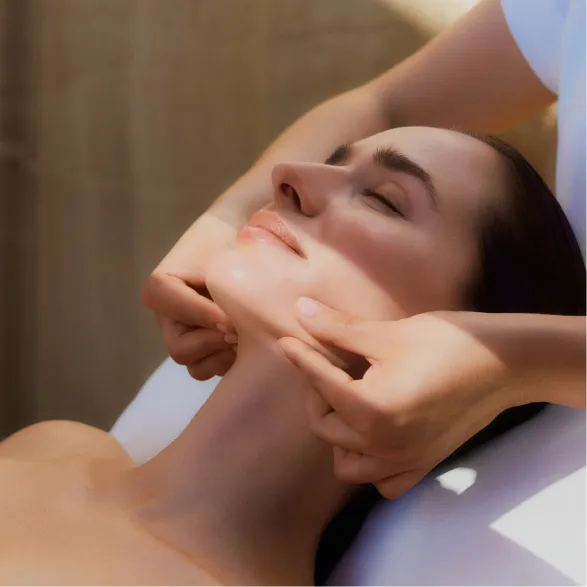
1. Touching the skin releases positive neurochemicals
A massage awakens the millions of receptors in your skin and stimulates the release of serotonin and dopamine. Gentle touch also releases oxytocin, the biochemical sign of empathy and one of the wellbeing hormones. If you are feeling low, placing yourself in the hands of a good aesthetician and treating yourself to a facial may be just what you need to lift your mood and renew your energy.

2. The skin feels and responds to stress
In some way, the skin "listens" to what happens in your mind. In moments of alert, the skin's nervous system releases substances that can trigger or aggravate certain conditions, such as psoriasis or dermatitis. Tools to manage anxiety and unease — such as meditation, yoga or a visit to the spa — can make a great difference to your wellbeing and the health of your skin.
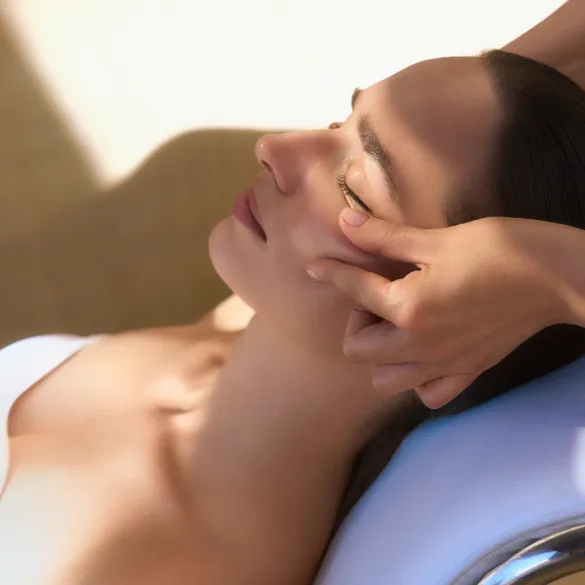
3. Stress accelerates ageing
If you go through a long period of nervousness and stress becomes chronic, your body will produce an excess of cortisol. This hormone has a direct impact on your skin:
- · It affects the fibroblasts and slows the synthesis of collagen and elastin, which has consequences for the firmness and elasticity of the skin.
- · It also influences lipid production, which can lead to drier skin.
- · It promotes the production of enzymes that degrade the skin fibres.
The solution? Make pampering yourself a must. Relaxation should be a priority in your everyday life. Take up activities that reduce stress and enjoy moments of self-care. As well as improving your wellbeing, you will also enjoy younger, glowier skin!
4. Skin disorders can affect your mood
More severe cases of acne or melasma, for example, can carry a heavy psychological burden. Remember that today there are psychodermatology professionals who tackle the issue from different angles, taking into account both your skincare and your mental health.
Natura Bissé experiences improve wellbeing by almost 70%
With our most comprehensive neuroscientific study, we have scientifically proven that our spa treatments — a fusion of cutting-edge cosmetics and the power of touch — also boost self-esteem and bring high levels of relaxation.
Choose your favourite... and enjoy!

📚 Sources:
· Field, T. et al.: Touch for socioemotional and physical well-being: A review. Developmental Review, December 2010
· Burton, N. (2017). Touch Hunger: Making a positive case for touch — the most neglected of our senses (Rev. ed.). Psychology Today.
· Ying Chen, John Lyga: Brain-Skin Connection: Stress, Inflammation and Skin Aging. Inflammation & Allergy - Drug Targets. Volume 13, Issue 3, 2014
· A. S. M. Morshed et al.: Understanding the impact of acne vulgaris and associated psychological distress on self-esteem and quality of life via regression modeling with CADI, DLQI, and WHOQoL: Scientific Reports. Volume 13, 2023.
· Savita Yadav, Tarun Narang, M Sendhil Kumaran: Psychodermatology: a comprehensive review. Indian Association of Dermatologists Venereologists and Leprologists, March-April 2013
· Alejandro Borrego-Ruiz , Juan J Borrego: Microbial Dysbiosis in the Skin Microbiome and Its Psychological Consequences. Microorganisms, 19 September 2024