Vitamin C is one of the most recommended and acclaimed cosmetic ingredients by dermatologists and skin care experts. And it is not only a natural source of antioxidant protection that combats free radicals and skin aging, it also promotes the production of collagen to improve firmness, and helps to unify tone, lighten spots and provide luminosity.
But, there are still many myths and false beliefs about the powerful vitamin C. If you also have doubts about this recognized asset, keep reading. Our skin experts have the answers.
1. IS IT TRUE THAT PRODUCTS WITH VITAMIN C OXIDIZE AND EASILY SPOIL?
It is true that the vitamin C molecule – ascorbic acid – is very unstable and oxidizes easily, so when it comes into contact with air, light or heat it can lose its properties. Fortunately, there are several ways to prevent that from happening.
For example, our vitamin C products are formulated with various forms of this stabilized and encapsulated vitamin. Thus, we ensure the penetration and release of this ingredient gradually into the skin and prevent its decomposition.

2. DO I HAVE TO STORE PRODUCTS WITH VITAMIN C IN THE FRIDGE?
Many people believe that to prevent oxidation of cosmetics with vitamin C, it is preferable to store them in the refrigerator. It is best to keep them in a dry and dark place, since the main factors that affect the properties of this active ingredient are UV light and oxygen. The low temperature also helps to keep them in good condition, since it helps to stop their degradation. So if you want to keep them in the refrigerator, go ahead, although it is not essential.
In any case, vitamin C products from Natura Bissé are formulated so that they keep their properties intact for the time indicated on their packaging (normally 12 months) once opened.
3. CAN I USE PRODUCTS WITH VITAMIN C IN SUMMER?
Of course! Vitamin C can be used all year round and in summer your skin needs it more than ever.
The reason why many people believe that it cannot be used in summer is because they think that it is a photosensitizing ingredient; That is, when it comes into contact with solar radiation it generates negative consequences for the skin, such as spots. But vitamin C is not photosensitizing, but rather photosensitive, which means that it degrades, oxidizes or loses its effectiveness in sunlight.
The solution is very simple: simply apply your cream 20 to 30 minutes before leaving the house. This way, when you expose yourself to the sun, vitamin C will have already been absorbed and you will help prevent its degradation. In any case, this active ingredient does not cause hyperpigmentation, on the contrary! It helps prevent it, unifies skin tone and lightens dark spots.
Be clear, vitamin C is a great beauty ally in the summer season. The sun generates free radicals in the skin and this active ingredient is one of the most powerful antioxidants, perfect for preventing and counteracting the negative effects of these free radicals on the skin.

4. IS IT SAFE TO USE PRODUCTS WITH VITAMIN C IF I AM PREGNANT?
Some think that vitamin C can worsen melasma, the dark spots related to pregnancy, but as we mentioned in the previous point, it is not true that it causes spots. There are also those who consider that some compounds in creams or other cosmetics can reach the blood causing problems in the fetus.
Don't worry, because we have good news: during pregnancy you can also enjoy Natura Bissé cosmetics with vitamin C. And there are no studies that show that this active ingredient causes any problems for your baby. In any case, we always recommend that you consult directly with your dermatologist.

5. CAN PRODUCTS WITH VITAMIN C ONLY BE USED FOR THE DAY?
Cosmetics with vitamin C can be applied both in the morning and at night, but due to their antioxidant protection it is more advisable to apply them during the day, when the skin is more exposed to external aggressions.
Furthermore, during the day skin cells focus on protecting themselves and at night on renewing themselves. If we apply vitamins to enhance this natural protection, we will work in synergy with our skin and enhance the results.
6. CAN I USE PRODUCTS WITH VITAMIN C IF I HAVE SENSITIVE SKIN?
Cosmetics with vitamin C are suitable for all healthy skin types. Of course, to encourage the penetration of the active ingredient, some brands use formulations with an acidic pH, which can cause redness or irritation.
In our case, the Natura Bissé formulas ensure the penetration of the ingredient through other methods, such as encapsulation systems. In this way, we do not need to use an excessively acidic pH. We are committed to achieving the greatest effectiveness of the product, but always respecting compatibility with the skin. However, if you have any previous skin problems, we recommend that you consult with your dermatologist.
7. IS VITAMIN C COMPATIBLE WITH RETINOL?
Both retinol and vitamin C are two of the most recognized cosmetic ingredients and endorsed by skin experts. Even so, there are still those who resist using them and, above all, using them together, for fear that it will be a combination that is too aggressive for the skin.
The reality is that various studies show that they form a very effective cocktail. For stability reasons, it is not easy to find formulas that contain both active ingredients, but we can include two products with these ingredients in the same beauty routine. We only have to wait a while before using the second cosmetic, since they are usually formulated with a different pH and in this way we ensure their effectiveness and skin tolerance.
At Natura Bissé we suggest using cosmetics with vitamin C during the day and with retinol at night, but always first perform a sensitivity test, such as behind the ear.

8. CAN PRODUCTS WITH VITAMIN C AND AHA BE COMBINED?
Another of the star ingredients for skin experts are alpha-hydroxy acids (AHAs) and, as in the case of retinol, there are doubts about whether it is good to use them together with vitamin C or not. The verdict?
In principle, there is no problem in combining both assets. However, as both vitamin C and AHAs tend to have a fairly acidic pH in formulas, they can cause some irritation in sensitive skin. In the case of Natura Bissé, our products with AHAs are rinsed off with water, which limits the risk of using vitamin C afterwards. Of course, after exfoliation, we always recommend applying a toner that comforts your skin.
9. DOES USING PRODUCTS WITH VITAMIN C CLICK THE PORE?
If vitamin C stays in the pores it can oxidize and make them look darker than normal. But if you follow a correct cleansing ritual and exfoliate your skin once or twice a week this doesn't have to happen. Your pores will be clean and no blackheads will appear.
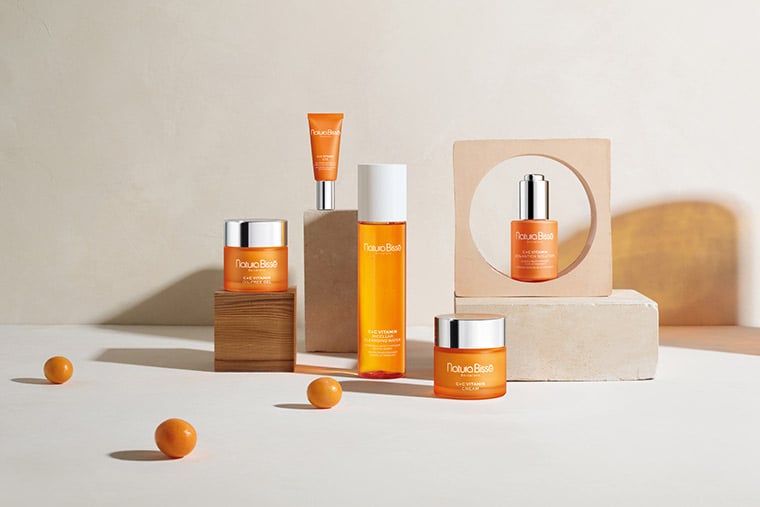
Discover C+C Vitamin Line