In Asia they have been praised for millennia and for a few years now this superfood has also conquered Western cosmetics. Do you know everything mushrooms can do for your skin? Discover why and how to include them in your beauty ritual!
1. They offer a rejuvenating action
Thanks to their high antioxidant content, mushrooms help fight free radicals – the first cause of premature skin aging.
2. They provide a lifting effect
Does shiitake sound familiar to you? In addition to being a super ingredient in Japanese and Chinese cuisine, this mushroom is
Known because it enhances the formation of collagen, which improves the firmness of the skin.
3. They hydrate incredibly
Hyaluronic acid has competition as an ultra-hydrating active ingredient, and there are experts who claim that
There are mushrooms that provide even more hydration. 1
4. They minimize pores
One of the most precious qualities of mushrooms is that some help visibly reduce the size of
the pores. The result? Smoother and softer skin!
5. They provide sebum-regulating properties
Another of its many benefits is that some have an astringent and sebum-regulating effect. Of this
shape, they help minimize the appearance of pimples, making them also ideal for combination or combination skin!
with a tendency to fat!
ADAPTOGENS:
THE TREND WITHIN THE
TREND
Have you heard of adaptogenic ingredients? They are very fashionable in the beauty field and some mushrooms are.
But what does it mean? They are substances that help the body adapt to mental and physical stress factors, such as
tiredness, cold, heat, etc. Thus, they help protect the skin from these agents, helping to preserve
her youth and beauty.
Do you also want to feel the power of mushrooms on your skin?
Find out with
these
Natura Bissé cosmetics formulated with these ancient organisms.
With mushroom shiitake, for rejuvenated-looking skin:
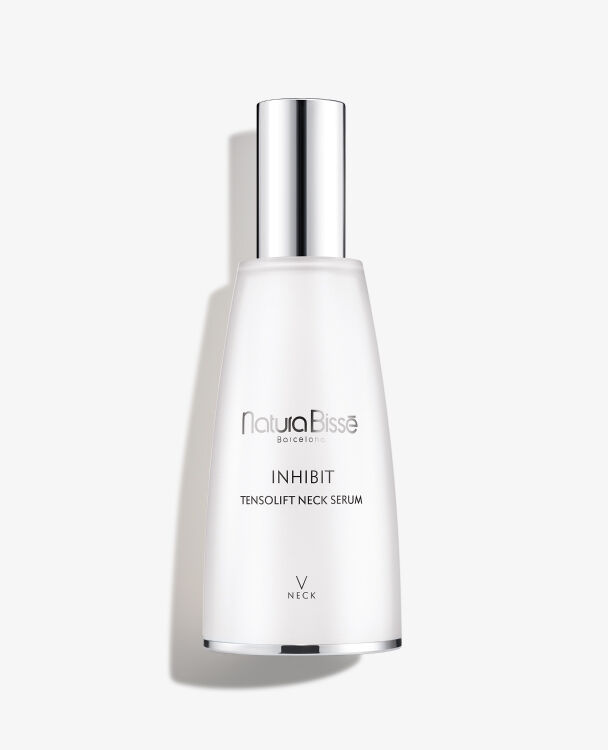
Inhibit Tensolift Neck Serum
Intensive neck and neckline lifting
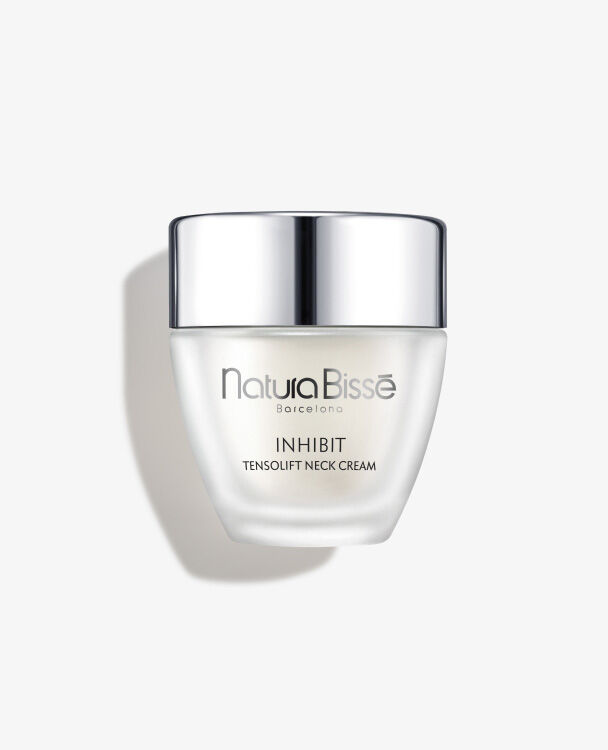
Inhibit Tensolift Neck Cream
Neck and neckline tension microlifting
With Polyporus officinalis, to minimize pores without dehydrating the skin:

Diamond Cocoon Enzyme Cleanser
Deep cleansing mousse

Diamond Cocoon Hydrating Essence
Strengthening moisturizing lotion

Diamond Cocoon Ultra Rich Cream
Strengthening moisturizing cream

Stabilizing Anti-aging Concentrate
Firming sebum-regulating serum

Essential Shock Intense Retinol Fluid
Anti-aging moisturizing veil

Oxygen Mousse
Refreshing cleansing foam
Sources
1.Liu H, He L. (2012) Comparison of moisturizing properties of polysaccharides from Tremella fuciformis and
hyaluronic acid. Journal of Anhui Agricultural Sciences 40(26): 13093–13094.
http://en.cnki.com.cn/Article_en/CJFDTotal-AHNY201226130.htm