Menopause usually begins at age 40* and opens a new stage in which the skin begins to require different care. Hormonal changes influence how you behave and how you respond to regular skincare. That is why we want to help you understand what is happening at this moment and how to adapt your routine to your new needs, knowing that each woman lives and feels this process in a unique way.
Estrogens: What they do and why they matter
As we approach menopause, estrogen levels begin to drop. This hormone is generated in the ovarian follicles, which over the years lose their ability to produce it. In addition to regulating the menstrual cycle, estrogens play key roles in skin health and general well-being:
🦴 They protect bone density and help prevent sagging
⚖ They help maintain a healthy lipid profile
✨ They contribute to firmer, hydrated and luminous skin
🧠 They influence memory and mood

The stages of menopause and its effects on the body
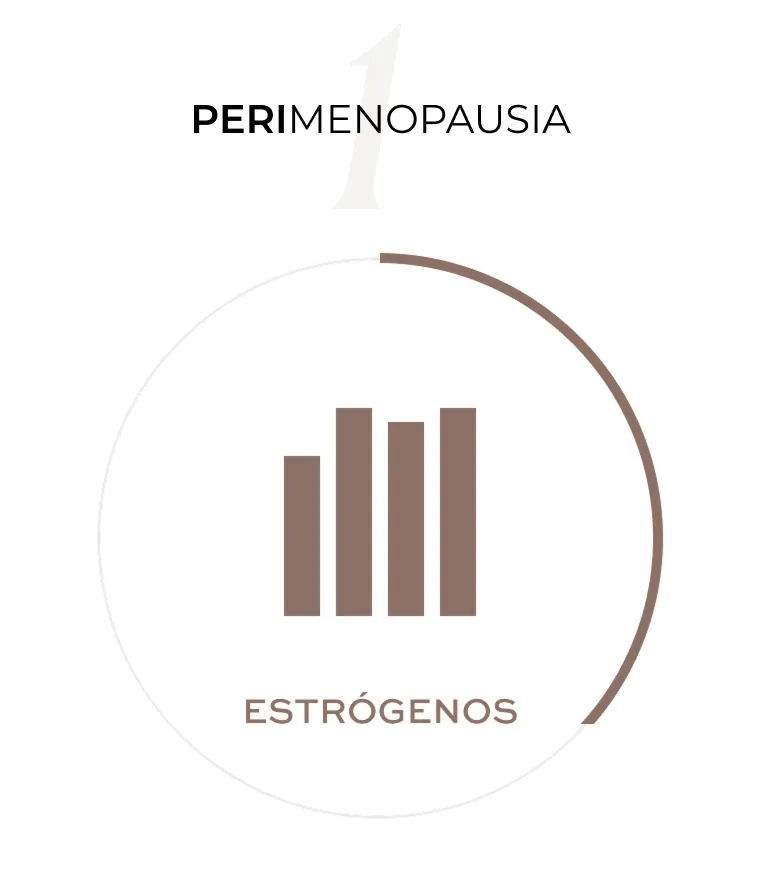
(40-50 years)*
Hormones begin to fluctuate. The first hot flashes, cycle alterations, changes in sleep, mood, progressive loss of bone mass and variations in cholesterol may appear.
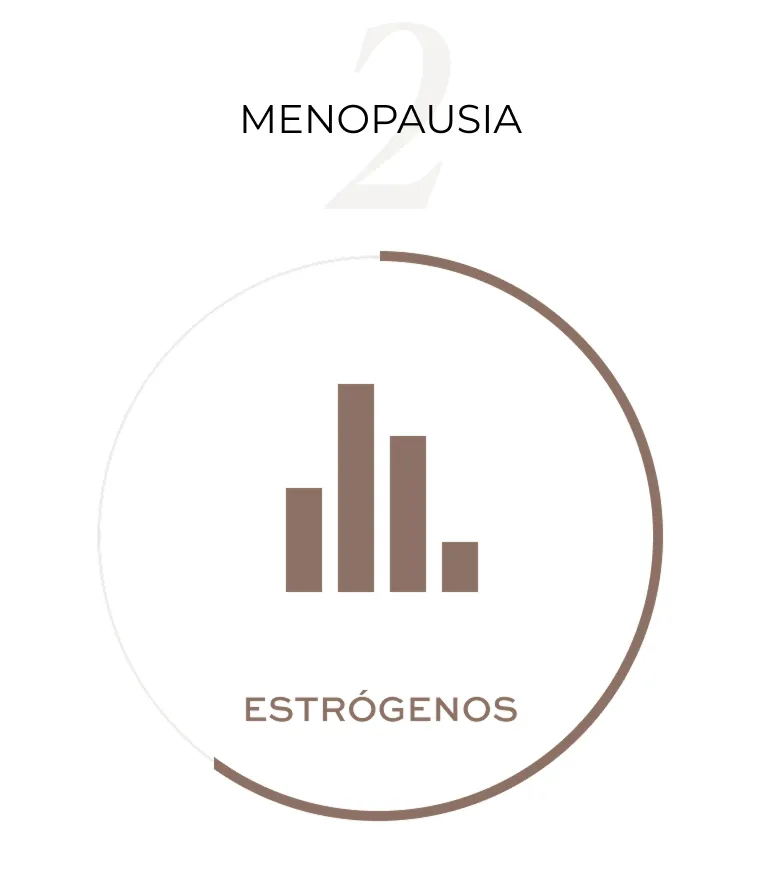
(≈50 years)*
It is confirmed after 12 months without menstruation. Symptoms that began earlier may persist and/or intensify: insomnia, vaginal dryness, joint pain, migraines, difficulty concentrating or changes in weight.
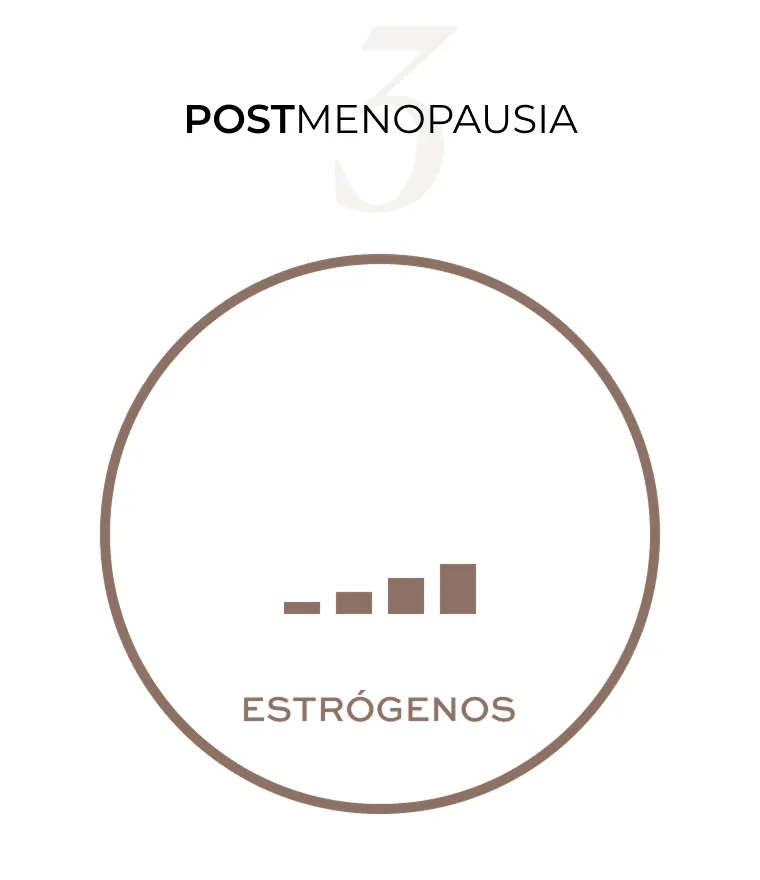
(Since menopause)
Hormonal levels stabilize at low values. Some discomfort disappears, but long-term risks such as osteoporosis and cardiovascular diseases increase.

What happens to the skin “under the surface” during menopause?
The skin needs estrogen to stay firm, hydrated and with an even tone. These hormones stimulate key cells such as fibroblasts - responsible for producing collagen, elastin and hyaluronic acid - as well as melanocytes, which regulate melanin and help prevent the appearance of spots.
As estrogen levels decrease, these biological processes slow down and trigger a series of structural changes beneath the surface:
∙ Collagen in free fall: In the first 5 years of menopause up to 30% is lost, and then around 2% annually for the next 15.
∙ The skin scaffold in check: Elastin and hyaluronic acid also decrease, which further weakens the skin structure.
∙ Cell relief at half throttle: With the drop in estrogen, the cell renewal process slows down, and there is a loss of epidermal density of –1.1% each year.
∙ Vacation Antioxidants: The decrease in estrogen reduces the skin's natural antioxidant protection, increasing exposure to oxidative stress and affecting its resistance and repair capacity.
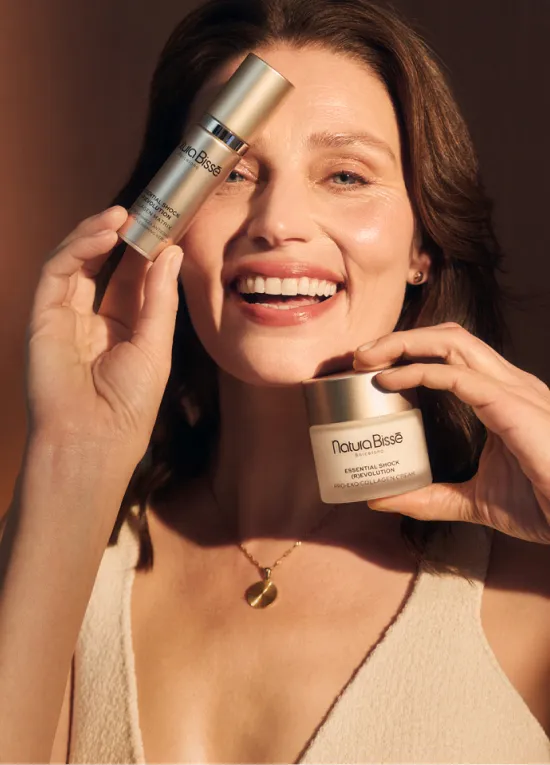
Visible effects of menopause on the skin
✓ More dryness: Increases transepidermal water loss (TEWL).
✓ More sagging and less elasticity: By lowering the levels of collagen, elastin and hyaluronic acid, firmness decreases and the skin looks less juicy.
✓ More wrinkles and expression lines: Especially around the eyes and lips, where the skin is thinner, has less support and is in constant movement.
✓ More fragility: By losing density and defensive capacity, the skin becomes more vulnerable to external aggressions.
The "extras" of this stage
∙ More sebum: Hormonal imbalance can increase the size and activity of the sebaceous glands, which can cause pimples and blemishes.
∙ Thinner skin: Vascular irregularities and veins become visible.
∙ Spots and uneven tone: Melanin becomes unbalanced and is distributed unevenly, which generates spots on the face, neck and hands.
∙ Photosensitivity: The skin becomes more reactive to UV radiation → greater risk of burns and spots.
Specific skincare routine for skin in menopause
During menopause, adapting your facial care routine is key to keeping your skin comfortable, firm and luminous.
· Use a facial cleanser for dry skin that offers extra comfort both at night and in the morning.
· Exfoliate the skin every few days; It is important to remove dead cells and reduce dark spots.
· Use firming and nourishing creams daily to help improve firmness and combat dehydration when estrogen drops and collagen decreases.
· Apply sunscreen daily. It is essential to prevent aging and, during menopause, it is even more necessary to help prevent the appearance of spots.
The key is in the skin structural proteins
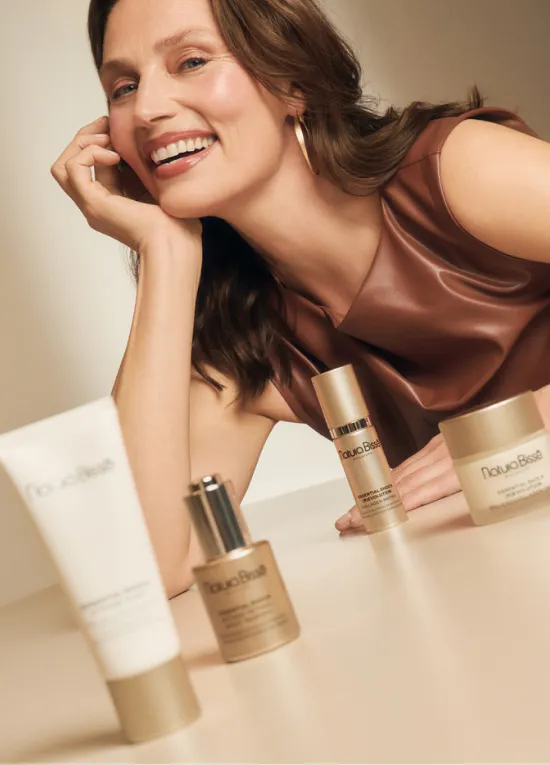
Structural proteins, such as collagen and elastin, are the foundation that gives support and firmness to your skin. With the passage of time and hormonal changes, its production decreases and the skin begins to lose elasticity and show sagging. At Natura Bissé we have designed Essential Shock to reinforce this essential structure and help the skin look firmer, smoother and more comfortable.
The perfect trio for skin in hormonal (R)evolution
Our gynecologist responds in 60 seconds
To accompany you in this stage in a comprehensive way, we have spoken with Sofía Fournier, a leading gynecologist specialized in Fetal Medicine and high-risk Obstetrics, who has given us some recommendations to experience a more bearable menopause thanks to a healthy lifestyle.
*Note: The indicated ages are only indicative, since each person can experience peri-, menopause or post-menopause at different times, depending on their health and individual biological factors.
SOURCES:
Aguilera, J. R., Ríos, P. G., & Zepeda, A. S. (2015). Calcium and vitamin D in the climacteric patient
Perinatology and Human Reproduction, 29(2), 83–87. Available in:
https://doi.org/10.1016/j.rprh.2015.01.002
Romero, C. E. (1997). Cardiovascular effects of
estrogens.
Medical Journal of Uruguay (13: 183-190).
https://www.smu.org.uy/publicaciones/rmu/1997v3/art3.pdf
Pérez, M. A., Arancibia, S. R. Protective actions of
estrogens in the central nervous system. UNAM.
http://www.ejournal.unam.mx/rfm/no49-6/RFM049000609.pdf
Honeyman, J. M. (2012). Metabolic and hormonal functions of the
skin. Chilean Journal of Dermatology, 28(3), 234-239.
https://www.sochiderm.org/web/revista/28_3/25.pdf
Accorsi-Neto, A., Haidar, M., Simões, R., Simões, M., Soares, J.,
Jr, & Baracat, E. (2009). Effects of isoflavones on the skin of postmenopausal women: a pilot study.
Clinics
(Sao Paulo, Brazil), 64(6), 505–510.
https://doi.org/10.1590/s1807-59322009000600004